
Namaste! Today, let’s explore the fascinating world of Sanskrit vowels (स्वराः or अचः), straight from Pāṇini — the true authority on Sanskrit grammar. Many say “There are 16 vowels in Sanskrit,” even linking them to the 16 annas of a rupee! Poetic indeed — but where’s the RBI proof?
This article clarifies the authentic count of Sanskrit vowels using the Māheśvara Sūtras and Vyākaraṇa Siddhānta Kaumudī — see background on Pāṇini for further reading.
What Are Vowels in Sanskrit?
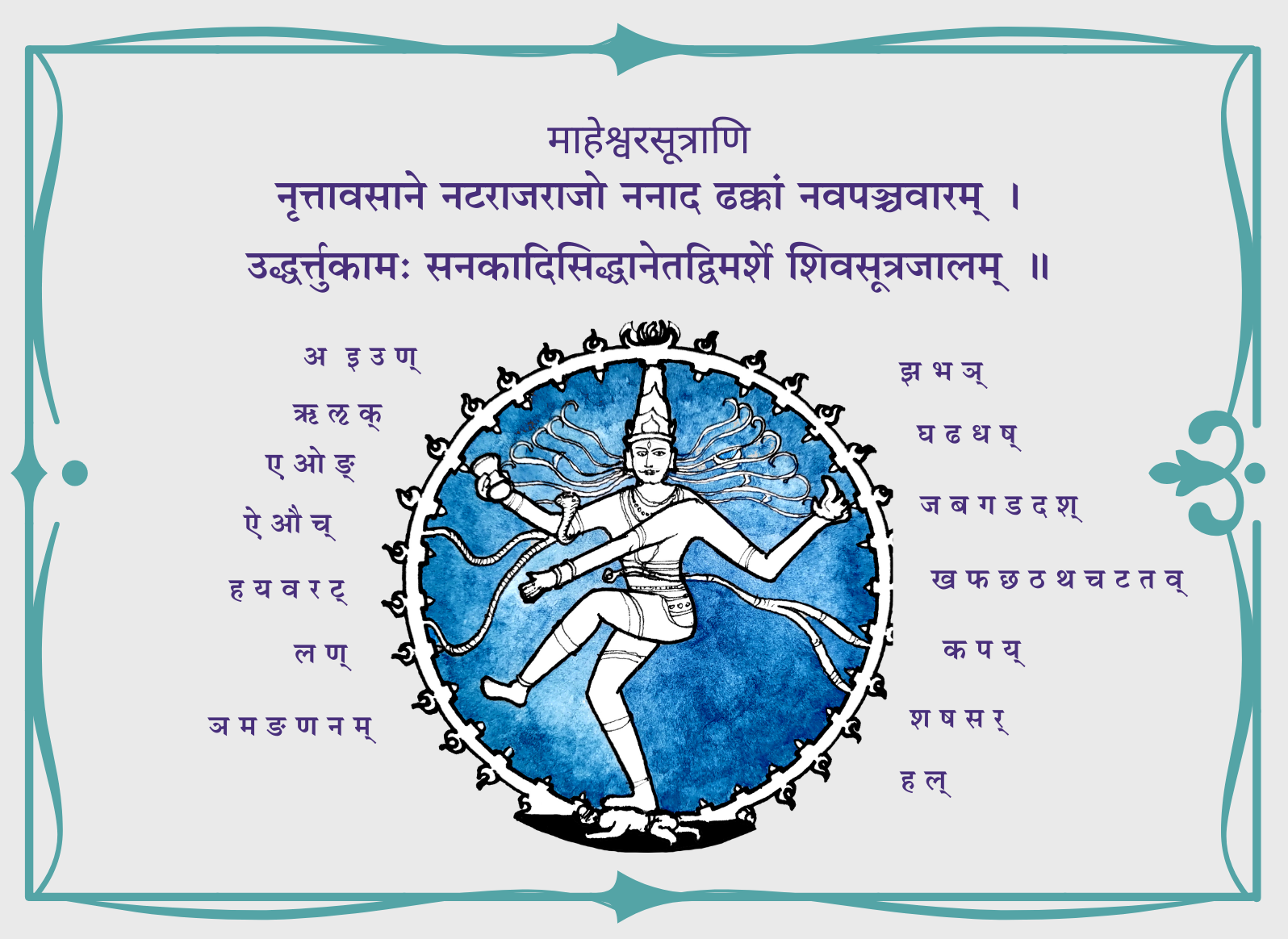
In संस्कृतम्, vowels are called अचः or स्वराः. But how many exist? Some claim 9, others 13 or 16. To know for sure, let’s refer to the माहेश्वरसूत्राणि — the sound system revealed by Lord Śiva.
The Real Count According to Pāṇini
1️⃣ अ इ उ ण्
2️⃣ ऋ ऌ क्
3️⃣ ए ओ ङ्
4️⃣ ऐ औ च्
Removing the final consonants (ण्, क्, ङ्, च्), we get: अ, इ, उ, ऋ, ऌ, ए, ओ, ऐ, औ — a total of 9 basic vowels.
But What About आ, ई, ऊ?
Excellent question! These are दीर्घस्वराः (long vowels). Pāṇini clarifies through the sūtra:
अणुदित्सवर्णस्य चाप्रत्ययः (१-१-६९)
This means — all सवर्ण (similar) sounds are part of the same family when they originate from the same place of articulation.
Short, Long, and Prolonged Vowels in Sanskrit
एकमात्रो भवेद्ध्रस्वः द्विमात्रो दीर्घ उच्यते।
त्रिमात्रस्तु प्लुतो ज्ञेयः व्यञ्जनंत्वर्धमात्रकम्॥
Meaning:
- ह्रस्वः (Short) – 1 mātrā
- दीर्घः (Long) – 2 mātrā
- प्लुतः (Prolonged) – 3 mātrā
Table of Sanskrit Vowels (Short, Long, Pluta)
Grammar Authority Speaks
भट्टोजी दीक्षितः in his Vaiyākaraṇasiddhāntakaumudī, in the commentary of the sūtra ‘मुखनासिकावचनोऽनुनासिकः (१-१-८)’, explains:
- ऌकारस्य दीर्घाभावात् — The vowel “ऌ” has no long form.
- तेषां ह्रस्वाभावात् — ए, ओ, ऐ, औ have no short forms.
Final Count of Sanskrit Vowels
- Base vowels: 9 (from Māheśvara Sūtras)
- Total including short, long, and prolonged forms: 22 (excluding accentual and nasal variations) If you want to start learning Sanskrit from scratch, our Beginner Sanskrit course online is the perfect starting point.
Bonus: What About अं and अः?
Many charts list them as vowels, but technically, they’re not. Curious to know why? Read the full breakdown in our companion article.
Conclusion
Sanskrit is not just a language — it’s the rhythm of India’s intellect and spirit. Let’s preserve its purity and share its authenticity with pride.
If you want to upgrade your Sanskrit skills from basics to advanced, our Intermediate Sanskrit course online is perfect to start with.जयतु भारतम्। जयतु संस्कृतम्
Comments